Systems automation
Let the routine work run itself
Some work follows the same steps every time. Business process automation sets that work up to run without someone pushing it along, and sends anything unusual to a person.
What we automate
Four kinds of work that move by hand today
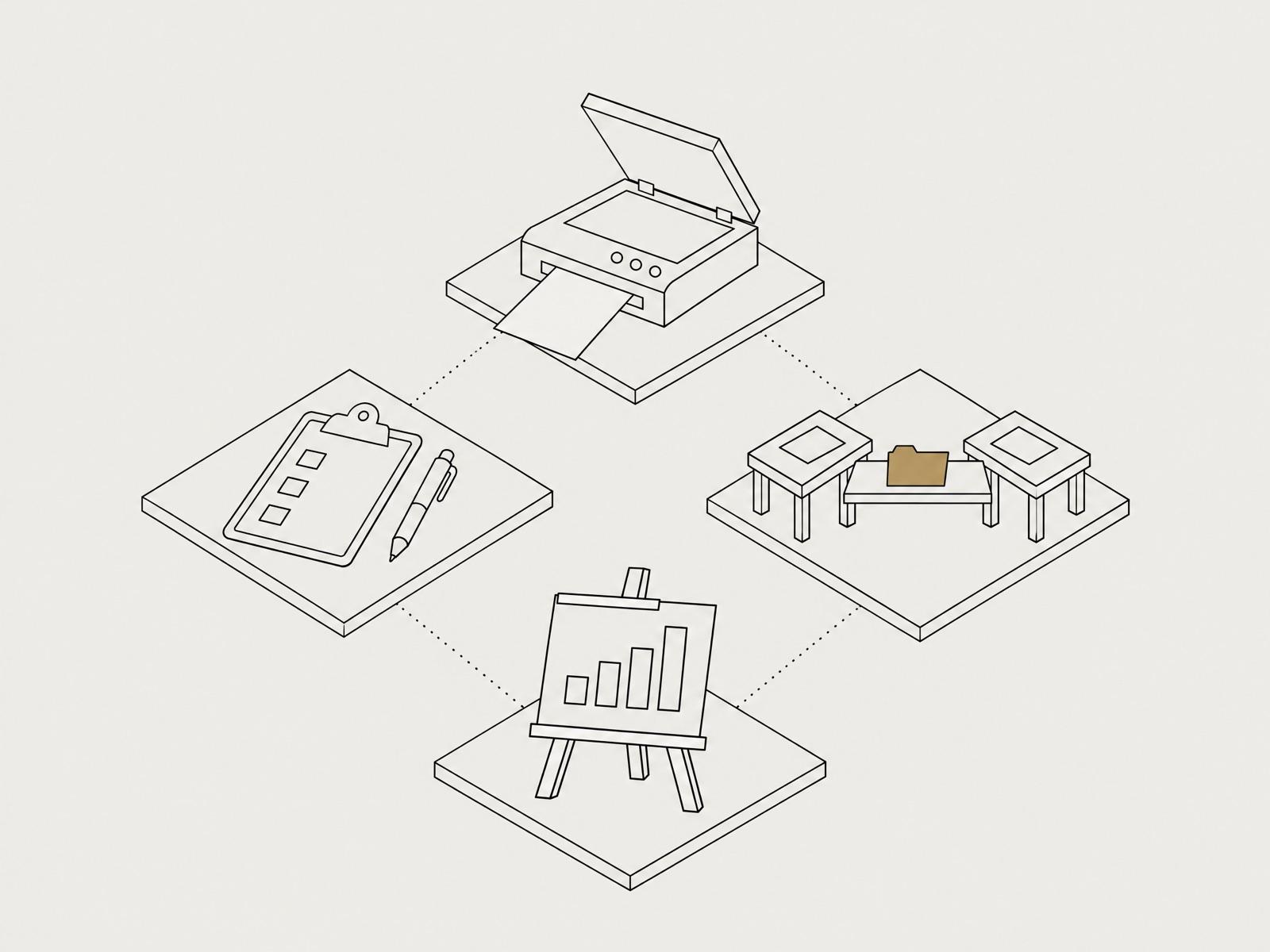
- 01
Documents
Invoices, forms and applications are read, checked against your records and filed where they belong.
- 02
Approvals
A request reaches the right person with what they need to decide. Their answer is recorded and the work moves on.
- 03
Handovers
When one team finishes, the next is told and has the details. Nothing is typed in a second time.
- 04
Reports
Figures are pulled from the systems that hold them and put together on the day you need them.
Where to start
Not every job should be automated
A good first job
- Is done often, by the same steps each time
- Has rules a person could write down
- Starts from records that are complete enough to trust
- Already has a check that would catch a mistake
Jobs we leave with people
- Work that needs judgement each time
- Work that changes from one case to the next
- Decisions someone must answer for
What stays with a person
The routine runs. The unusual comes to you
An automation that hides its mistakes is worse than none. Each one we build stops and asks when something does not fit the rules.
How we keep it safe
- Exceptions go to a named person
- Anything outside the rules is set aside and sent to someone who can decide, with the reason it was stopped.
- Approvals stay approvals
- Where a person signs off today, a person signs off afterwards. We do not remove a check to save a step.
- Every step is written down
- You can see what ran, when it ran and what it did, and trace any result back to where it came from.
- Your team can stop it
- We write down how to pause an automation and do the job by hand while it is looked at.
Where it fits, we run this on Q
Black Sails represents Q in Australia. Q carries out multi-step jobs inside your systems, asks a named person before a protected action, and keeps a record of every step.
Where it does not fit, we use the tools you already own or recommend another.
More about QHow it runs
From one job done by hand to one that runs
- 01
Map
We write down the job as it is done today, step by step, with the people who do it.
- 02
Build
We build it in your systems and agree the rules for what counts as unusual.
- 03
Run alongside
It runs beside your team on real work. They check its results until they trust them.
- 04
Hand over
Your team runs it. We leave written instructions and stay on call.
Next step
Tell us about one process that costs your people time. We’ll tell you whether we can help.
What happens next
- 01
You tell us about one process
A few lines is enough: what the work is, who does it and how often.
- 02
We ask some questions
A short call to understand how it runs today.
- 03
You get a straight answer
Whether we can help, what we would build and what it would cost.
Pyrmont NSW 2009
+61 401 472 649