Industries · Mining and resources
AI for the paperwork between site and office
Inspections, maintenance logs and contractor documents are slow to reach the people who need them. We put AI to work on capturing, checking and routing them, so a problem is seen the day it is written down.
Where AI helps
Four jobs on a site that AI does well
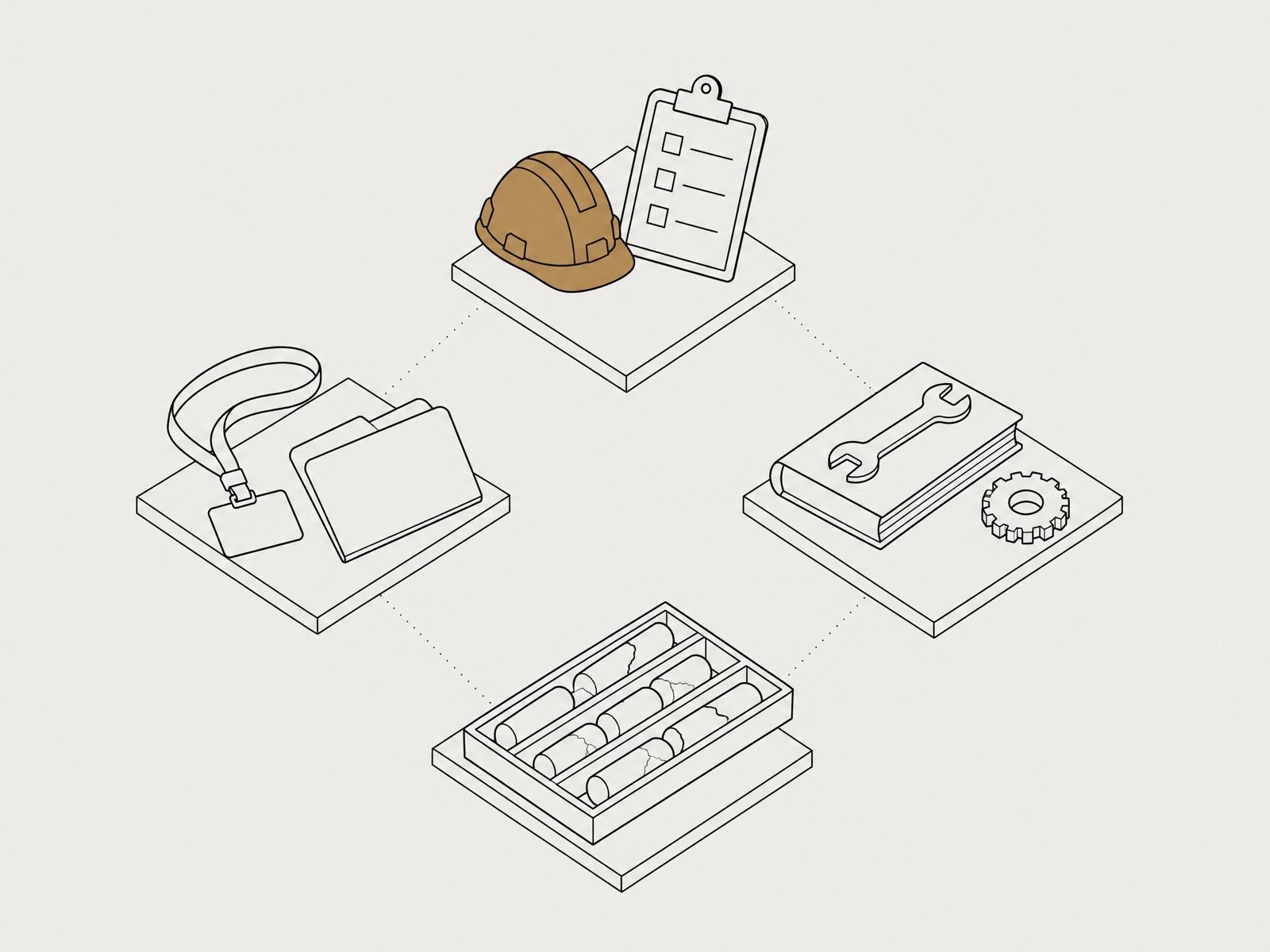
- 01
Inspections
A form filled in on site is read the same day. Anything marked as a fault, or left blank, is sent to the person responsible for that area.
- 02
Maintenance history
Work orders, service logs and fault notes are kept in one searchable place. Ask what was done to a machine and get the answer with its source.
- 03
Contractor documents
Licences, insurances and inductions are read and checked against what the site requires, and a date about to lapse is raised before the contractor arrives.
- 04
Reports
Shift, production and regulatory reports are put together from the records behind them, ready for the responsible person to check and sign.
Before you start
AI needs the record to leave site the day it is made
It works when
- Each machine and area has one agreed name or number
- Forms are completed on a device, or photographed the same shift
- Someone is named as responsible for each area
- Contractor requirements are written down, by type of work
Fix these first
- Paper forms that wait for the end of a swing
- Maintenance history split between a system and a whiteboard
- Contractor documents held in someone’s inbox
What stays with a person
AI moves the paperwork. People make it safe
On a site, a wrong assumption can hurt someone. We keep AI on reading, checking and routing documents, and it takes no part in any decision about whether work is safe to start.
Decisions we leave with you
- Permits and isolations
- A permit is issued, and plant is isolated and locked, by the people authorised to do it. AI does not approve, issue or close either.
- Statutory sign-offs
- Where the law names a person to inspect or sign, that person does. AI can prepare the record for them.
- Who comes on site
- AI can show that a document is missing or about to lapse. A person decides whether a contractor is cleared to work.
- What is reported
- A report to a regulator or an owner is read and signed by the person who answers for it.
The platforms we bring
Two products we offer in Australia
Black Sails offers Route Royal in Australia, and represents Q. They keep people, jobs and conversations in order. They are not safety or mine planning systems, and they sit beside the ones you run.

Suppliers, contractors and jobs in one place
Route Royal calls itself the AI Business Operating System. For a site or a services company it holds the commercial side: who you deal with, what has been asked of them and what is still open.
- One record for each supplier and contractor
- Projects and tasks with an owner for each
- One inbox for email, SMS and WhatsApp
- A help desk for requests and faults
With AI
Q works inside it: it searches your records, drafts replies and sorts requests, and does the work you ask once you confirm.

The AI that does the work
Q is built by Q Division to do work inside the systems a business already uses, with a person in charge of anything that matters.
- Searches your own records
- Shows its sources with each answer
- Asks a named person before it acts
- Keeps a record of every step
With AI
Claude and ChatGPT can also connect to Route Royal and work from the same records.
How it runs
From one job to the next
- 01
Look
We follow an inspection form, a work order and a contractor file from site to office and time each one.
- 02
Tidy
We agree the names for plant and areas, and who is responsible for each. This is usually most of the work.
- 03
Prove
One job, such as checking contractor documents, runs on your real files with a person confirming each result.
- 04
Extend
When your people trust it, you choose what it may route without asking, and we move to the next job.
Next step
Tell us about one process that costs your people time. We’ll tell you whether we can help.
What happens next
- 01
You tell us about one process
A few lines is enough: what the work is, who does it and how often.
- 02
We ask some questions
A short call to understand how it runs today.
- 03
You get a straight answer
Whether we can help, what we would build and what it would cost.
Pyrmont NSW 2009
+61 401 472 649