Industries · Manufacturing
AI for the paperwork around the job
Your people know how to make the part. What slows them is the quoting, the job sheets, the records and the chasing around it. We put AI to work there, and leave the making to them.
Where AI helps
Four jobs in a factory that AI does well
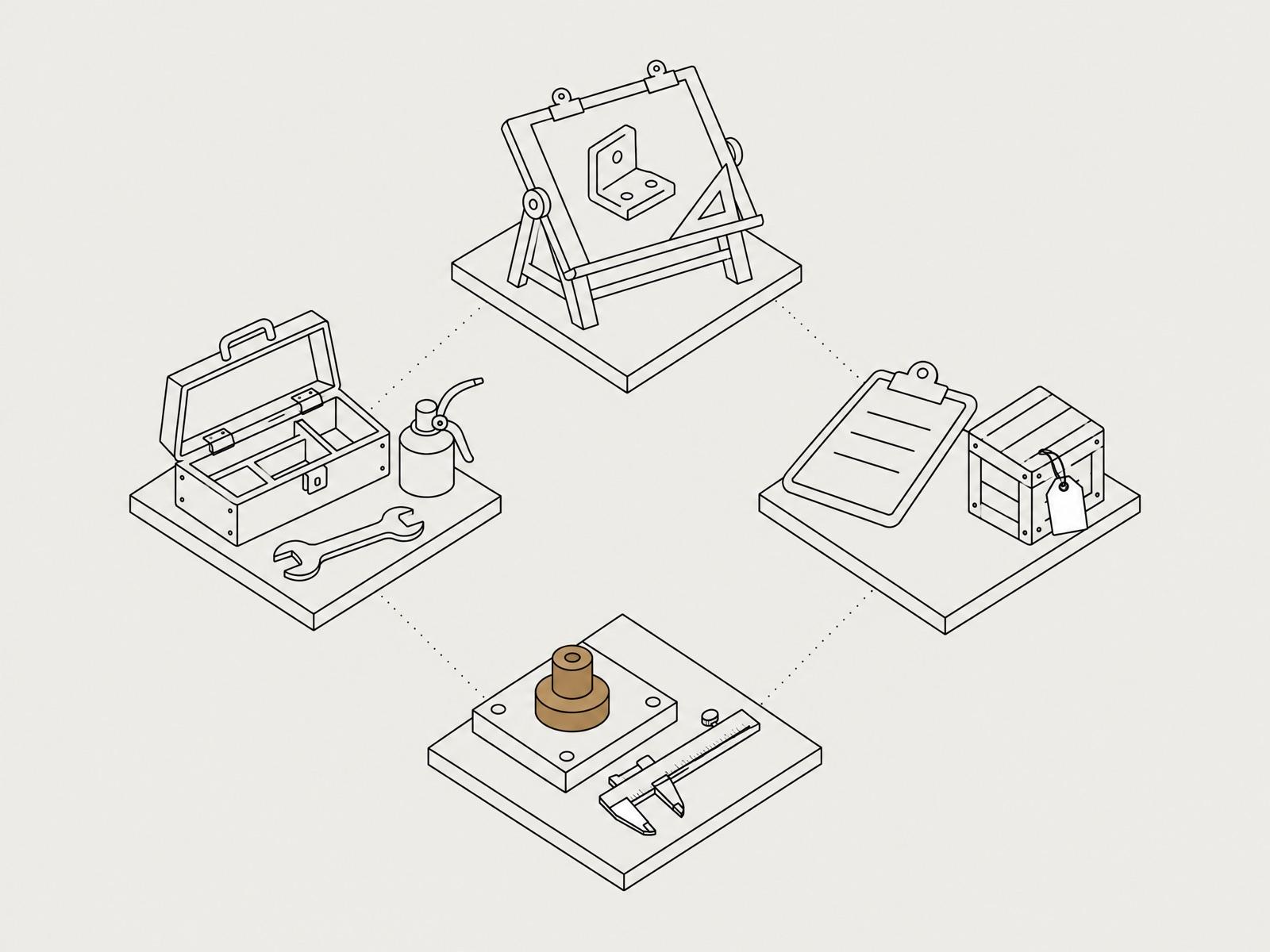
- 01
Quotes
A first quote is drafted from the drawing, the specification and the jobs you have run before. Your estimator checks it and sets the price.
- 02
Job paperwork
An accepted quote becomes the job sheet and the purchase orders without being typed again. Sales and the customer can see where a job is up to.
- 03
Quality records
Measurements and photos are captured at the bench and filed against the job. Anything outside tolerance is marked for a person to look at.
- 04
Maintenance
Service logs and fault notes are kept in one searchable place, so the history of a machine is there when it next stops.
Before you start
AI needs your jobs and parts to carry one number
It works when
- A part has the same number in every system
- Drawings and specifications are stored where software can read them
- Time and materials are recorded against each job
- Past quotes are kept with what the job really cost
Fix these first
- Job sheets that exist only on paper
- Pricing rules known to one estimator
- Stock counted in a spreadsheet nobody trusts
What stays with a person
AI handles the records. Your people run the floor
A wrong figure in a factory can cost a batch, a customer or an injury. We keep AI on the paperwork, and leave every decision about machines, safety and quality with the person who answers for it.
Decisions we leave with you
- Safety
- AI does not start, stop or set a machine, and it does not sign off a safety check. People do.
- Quality release
- AI can mark a reading that looks wrong. A qualified person decides whether the part ships.
- Price and delivery dates
- A drafted quote is a draft. Someone who knows the floor commits to the price and the date.
- Orders to suppliers
- A suggested order shows its reasons. Nothing is bought until a person says so.
The platforms we bring
Three products we offer in Australia
Black Sails offers Route Royal and Vellon in Australia, and represents Q. They look after customers, orders and money. They sit beside the system that plans your production; they do not replace it.

Customers, orders and stock in one place
Route Royal calls itself the AI Business Operating System. For a manufacturer it holds the customer side of the business: who asked, what they ordered, what is in stock and what is on its way.
- Enquiries and deals in one pipeline
- Orders from trade customers
- Stock by location: on hand, committed and incoming
- Supplier orders and low-stock alerts
- One inbox for email, SMS and WhatsApp
- A help desk for after-sales questions
With AI
Q works inside it: it searches your records, drafts replies and sorts support tickets, and does the work you ask once you confirm.

What is owed, collected and accounted for
Vellon is a headless billing engine. It works out what is owed, collects it through your payment provider and keeps the books straight.
- Invoices and credit notes
- GST worked out on each sale
- Discount and promotion codes
- A double-entry ledger
With AI
It is built for software to use, and comes with a connection that lets AI tools work with billing directly.

The AI that does the work
Q is built by Q Division to do work inside the systems a business already uses, with a person in charge of anything that matters.
- Searches your own records
- Shows its sources with each answer
- Asks a named person before it acts
- Keeps a record of every step
With AI
Claude and ChatGPT can also connect to Route Royal and work from the same records.
How it runs
From one job to the next
- 01
Look
We follow one order from enquiry to dispatch and count every time its details are typed or copied.
- 02
Tidy
We give parts, jobs and customers one number each across your systems. This is usually most of the work.
- 03
Prove
One job, such as first-draft quotes, runs on your real enquiries with your estimator approving each one.
- 04
Extend
When your people trust it, you choose what it may do without asking, and we move to the next job.
Next step
Tell us about one process that costs your people time. We’ll tell you whether we can help.
What happens next
- 01
You tell us about one process
A few lines is enough: what the work is, who does it and how often.
- 02
We ask some questions
A short call to understand how it runs today.
- 03
You get a straight answer
Whether we can help, what we would build and what it would cost.
Pyrmont NSW 2009
+61 401 472 649